
As part of the construction work on the property at Pillnitzer Straße, we place great importance on protecting nature and biodiversity. The planning and implementation of all measures are carried out in close coordination with the Lower Nature Conservation Authority of the Bautzen District Office and an independent environmental and nature conservation expert. The project is also supported through funding programs provided by the European Union and the Free State of Saxony.
Replacement Habitats for Birds
A key component of the conservation measures is the protection of native bird species. As nesting sites previously existed in the roofs of the existing older buildings, nesting boxes have been installed as replacement habitats. These provide suitable breeding and nesting opportunities for birds during and after the construction phase.
Protection and Relocation of Sand Lizards
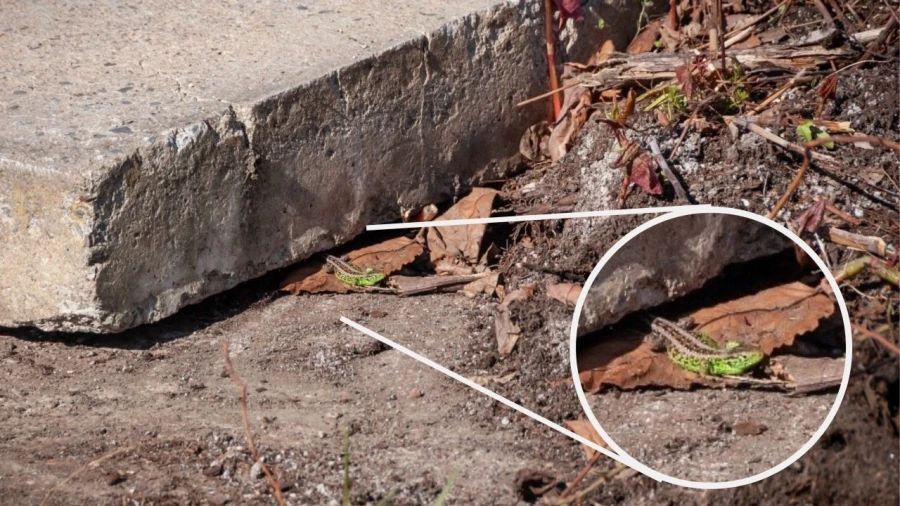
Another important focus is on the sand lizards living on the property. To ensure their protection during the construction works, the animals are being professionally relocated.
Special sheets are placed on the ground to facilitate the careful monitoring and capture of the reptiles. The black coverings create warm shelter areas while also attracting insects and snails, which serve as a food source. At times when the reptiles are less active, the environmental expert inspects the areas, carefully collects sand lizards and slow worms, and relocates them beyond a specially constructed reptile protection fence.
The neighboring allotment gardens already serve as a natural habitat for these animals and provide suitable living conditions throughout the construction period.
Once the soil remediation work has been completed, a diverse replacement habitat will be created on the site, providing the reptiles with a sustainable new home and long-term living environment.
Photos: Ingenieurbüro Oeser, Frankenberg/Sa. 2026
Replacement Habitats for Birds
A key component of the conservation measures is the protection of native bird species. As nesting sites previously existed in the roofs of the existing older buildings, nesting boxes have been installed as replacement habitats. These provide suitable breeding and nesting opportunities for birds during and after the construction phase.
Protection and Relocation of Sand Lizards
Another important focus is on the sand lizards living on the property. To ensure their protection during the construction works, the animals are being professionally relocated.
Special sheets are placed on the ground to facilitate the careful monitoring and capture of the reptiles. The black coverings create warm shelter areas while also attracting insects and snails, which serve as a food source. At times when the reptiles are less active, the environmental expert inspects the areas, carefully collects sand lizards and slow worms, and relocates them beyond a specially constructed reptile protection fence.
The neighboring allotment gardens already serve as a natural habitat for these animals and provide suitable living conditions throughout the construction period.
Once the soil remediation work has been completed, a diverse replacement habitat will be created on the site, providing the reptiles with a sustainable new home and long-term living environment.
Photos: Ingenieurbüro Oeser, Frankenberg/Sa. 2026